
As I always tell my teams, "Not every idea is a good one, and not every good idea should be done!" Every Value Proposition can be disrupted, and every business has a competitor. If you cannot identify yours, you do not have a clear Value Proposition. In 2026, your list should include your customer's EHR, a general AI assistant, and your customer's own team with a few good tools.
Porter's Generic Strategies
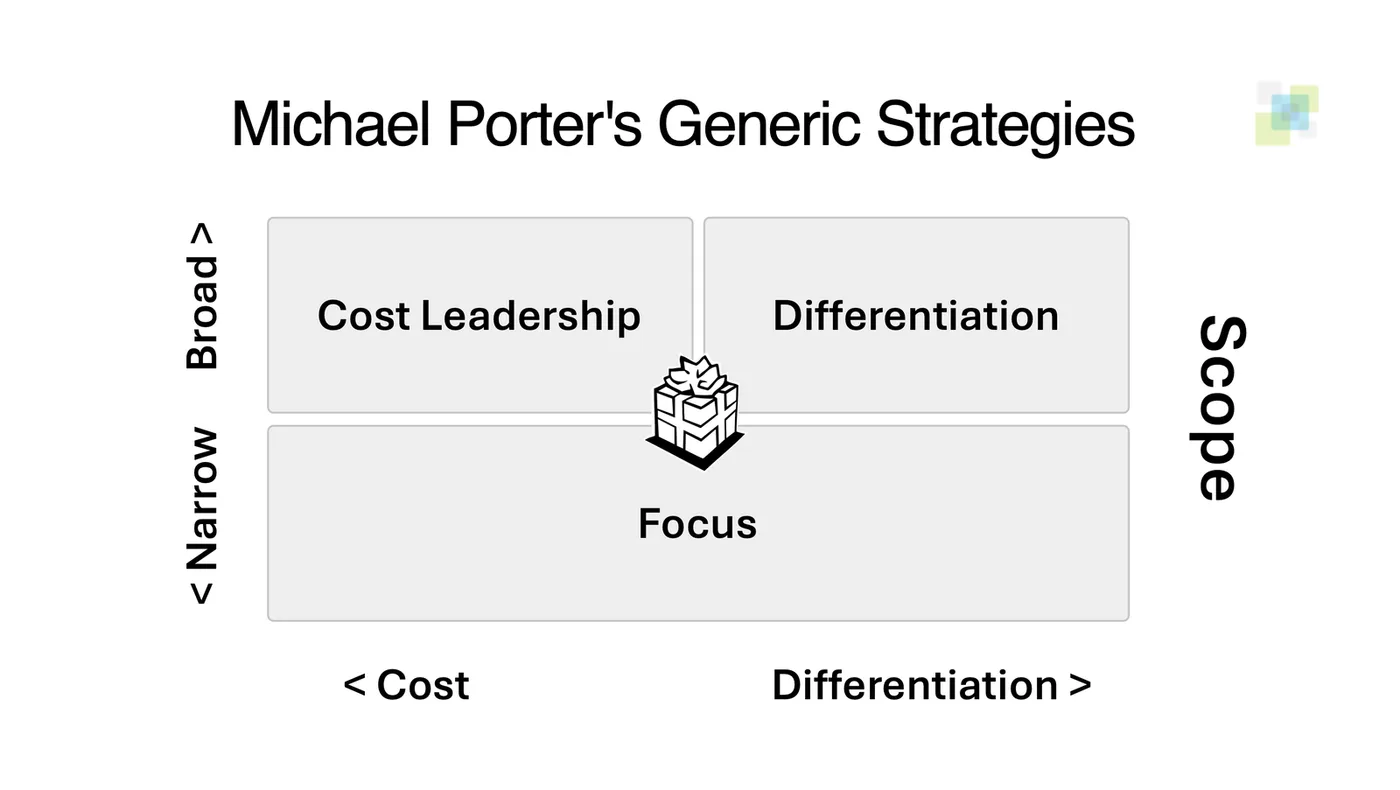
Michael Porter's Generic Strategies
Michael Porter showed that companies can gain advantage through three strategies.
- Cost Leadership: the lowest cost position. Think Walmart's $4 prescriptions, which changed retail pharmacy overnight.
- Differentiation: unique features that command a premium. Think precision medicine.
- Focus: a specific niche, with cost or differentiation inside it. Outside healthcare, think Lululemon.
AI affects each. Cost Leadership becomes harder to defend when everyone gets cheap labor from the same models. Differentiation built on a software feature erodes quickly, while differentiation built on evidence or proprietary data lasts. Focus may be the great winner, since AI makes it economic to serve niches that were once too small.
Red and Blue Oceans
Kim and Mauborgne's Blue Ocean Strategy distinguishes two approaches.
Red Ocean models compete for share in existing markets, with price pressure and incremental growth. Generic drugs are the classic case.
Blue Ocean models create new market space by innovating product, price, and cost together. Teladoc is my example. It pioneered a new market for virtual care. Then the market got crowded, the pandemic surge normalized, the Livongo acquisition led to substantial impairments, and profits proved hard to find. First-mover advantage does not mean a business model works.
AI compresses that cycle. Ambient documentation went from pilots to about $600 million in 2025 spending, according to Menlo Ventures, with incumbents building their own versions, all in a few years. Life sciences offers a different lesson. Recursion absorbed Exscientia for $688 million, and Verge Genomics moved away from internal development toward partnering after its lead ALS candidate failed. These are business model pivots driven by clinical reality.
Levers and Pivots
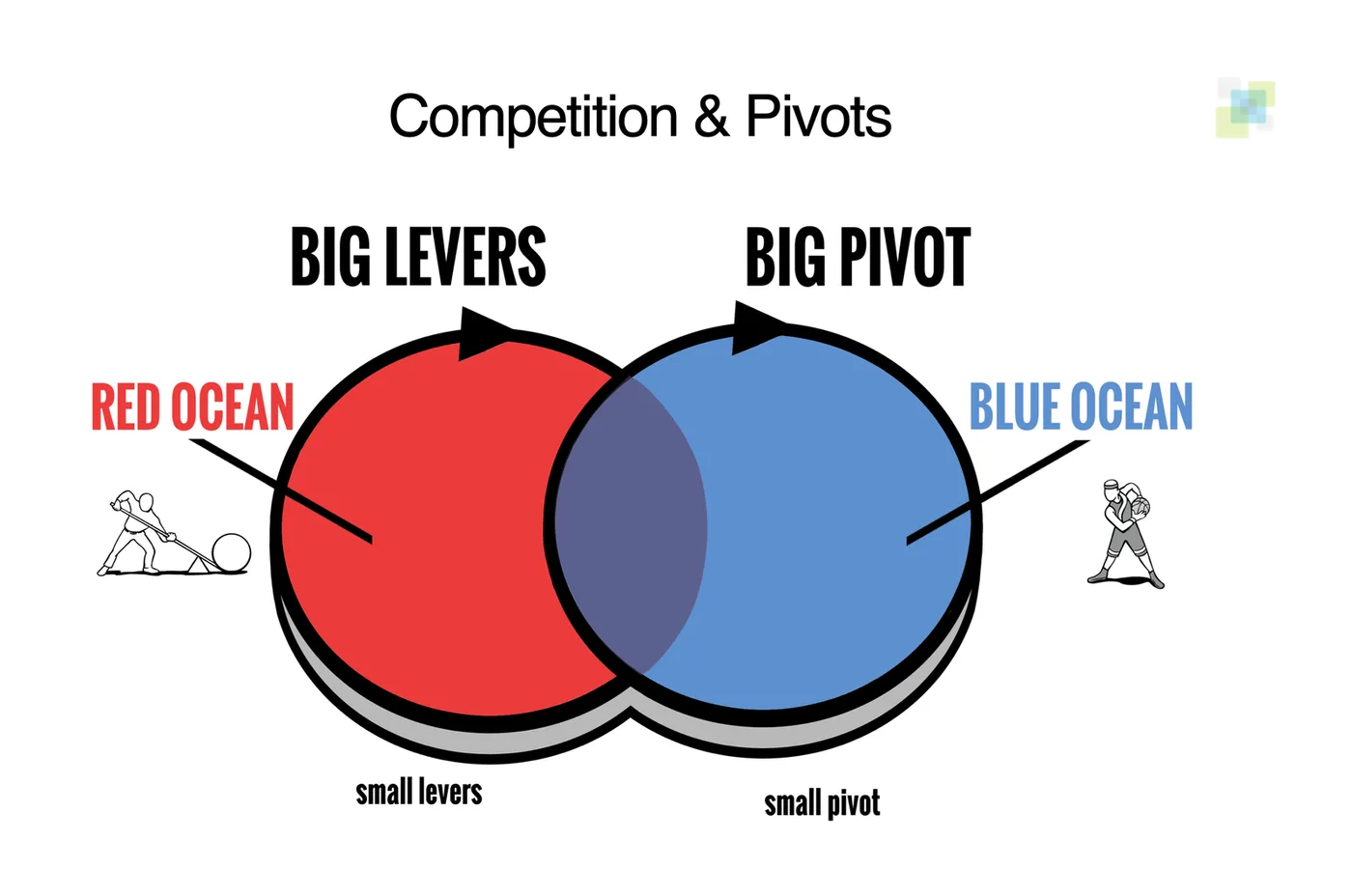
modelH: Competition and Pivots
A lever adjusts a block to improve performance in markets you already serve. It does not change the model. It makes the model more profitable. Small levers press on one block. BIG LEVERS change one fundamental: Customer, Product, Operations, or Economics.
A pivot changes direction with one foot grounded, like a basketball player. Small pivots change one block. BIG PIVOTS change a fundamental. Here are the common types.
- JTBD: the same offering solves a different problem. A weight management company might move beyond in-person workshops toward digital services and GLP-1 treatments.
- Customer Segment: a similar solution for different Buyers. A digital fitness platform might move from direct-to-consumer to channel sales for employers and Medicare Advantage.
- Platform: repurpose technology for a more pressing problem. A care journey software company might move to quality measurement and improvement.
- Value Proposition: change priorities based on what customers actually do.
- Channel: change how you reach the Customer Segment.
- Revenue: change how you charge, such as moving to subscriptions, or the razor-and-blade approach.
Larger examples include CVS Health's move into insurance and care services, Johnson & Johnson's separation of Kenvue, and UnitedHealth Group's growth through Optum. None of those stories stood still. CVS took a $5.7 billion impairment and slowed Oak Street's clinic growth. Optum is shrinking its provider network and closing or selling about 550 care sites. Kenvue, once spun out, was acquired by Kimberly-Clark. A pivot is not a finish line.
Gather multiple data points before you pivot. No product satisfies everyone, and random jumps cost credibility.
modelH Business Model Pivots
The Three AI Pivots
I expect to see these most often.
- Tool to service: stop selling software that helps do the work. Sell the completed work, and take accountability for it.
- Seat to outcome: stop charging per user when AI reduces users. Charge for the result.
- Feature to system of record or data: if your feature is about to be bundled, move toward the data, workflow, or relationship that the bundler lacks.
Applying It: HealtHCoX
Consider a hypothetical company. HealtHCoX offers care navigation directly to affluent consumers with high-acuity cases. It also runs a marketplace for navigator training and certification, with an electronic system for patients, families, and navigators.
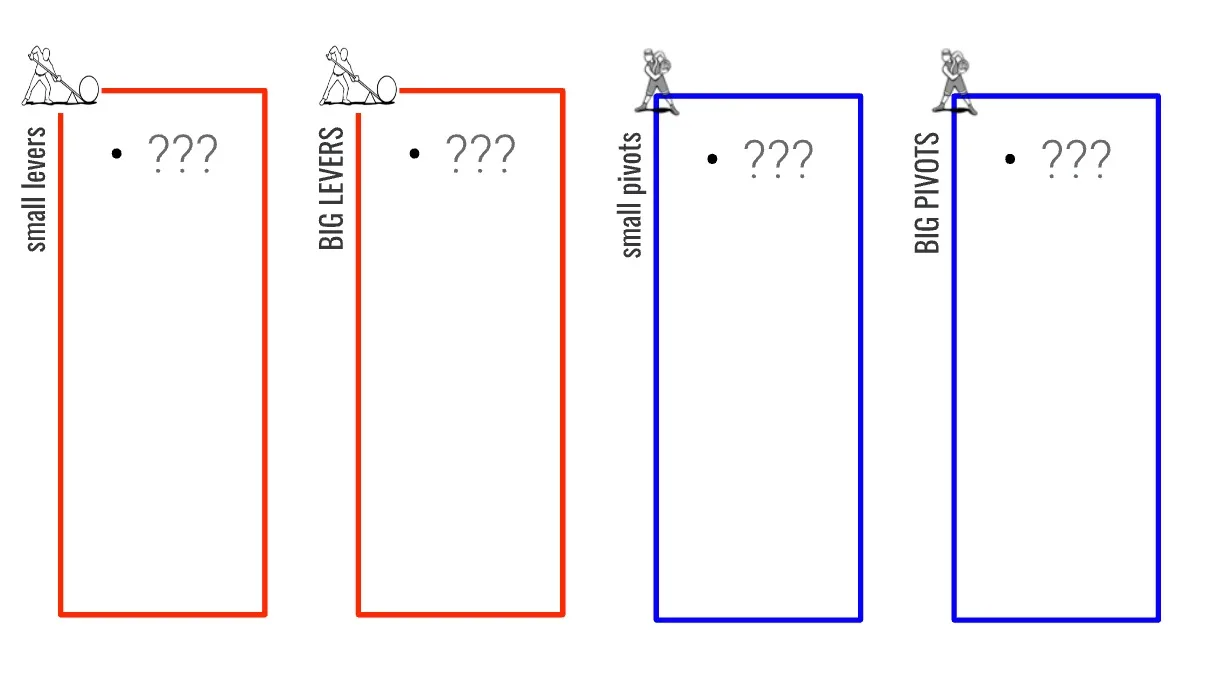
Red Ocean levers
- Resell protocols and education (low risk): package existing content for other care organizations, delivered on the existing platform.
- Lead generation (medium risk): a matching marketplace that pairs high-acuity patients with expert navigators, built on an existing SaaS platform.
Blue Ocean pivots
- Navigation platform (medium risk): sell a complete digital navigation system to agencies and hospitals, with HealtHCoX protocols driving workflows.
- Home healthcare (high risk): enter home care for all consumers. This means a new company in a crowded market.
Now run the AI test. An AI navigator could do much of the information work, so the reselling lever may shrink quickly. Matching can be done well by software. What holds up? The proprietary protocols, certified humans, and accountability on hard cases. So the 2026 pivot may be AI-supported navigators for high-acuity patients, where each expert covers many more families and HealtHCoX is paid for outcomes.
New Questions for 2026
- Which competitors on our list did not exist two years ago?
- Is AI a lever for us, or does it force a pivot?
- Which of the three AI pivots applies?
- How long will this Blue Ocean stay blue?
What is Next?
Next, we wrap up Value Propositions.
to your health,
Kevin