
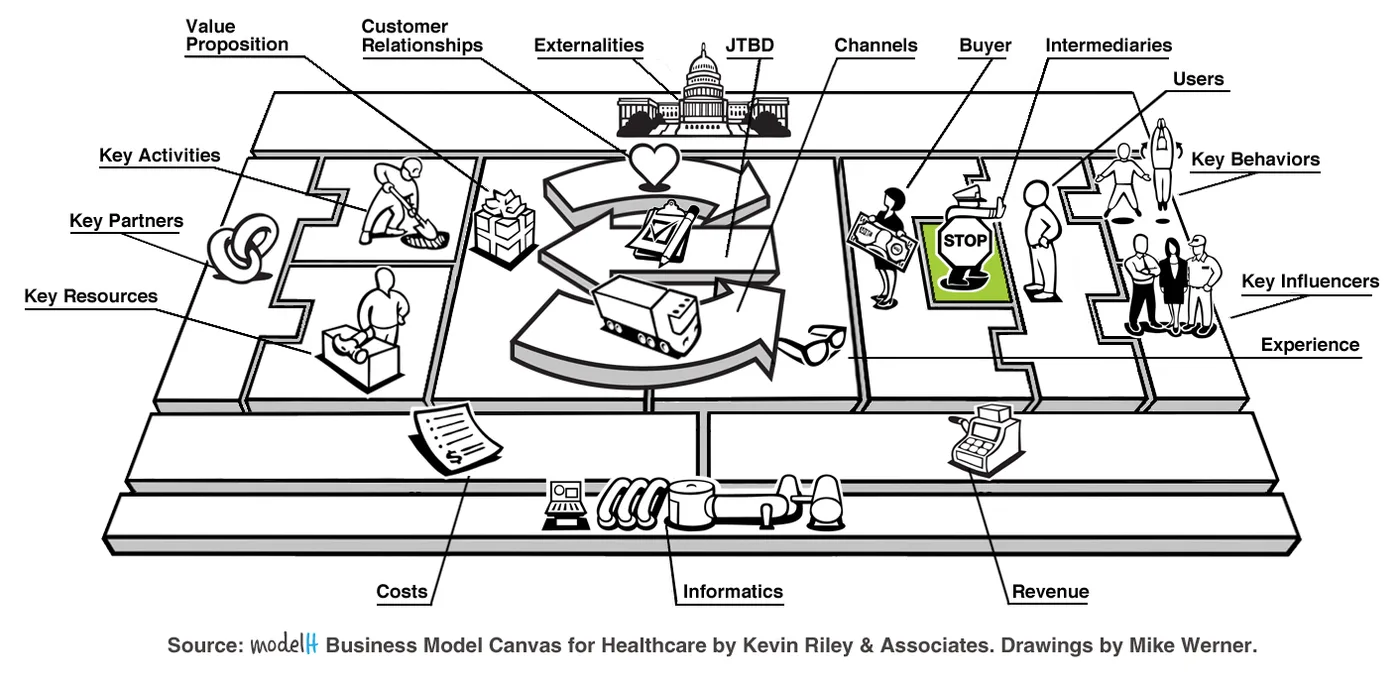
modelH Business Model Canvas: Intermediaries
Not all Intermediaries are bad. They usually exist when a business model has flaws, and many successful models started as one. The word comes from the Latin intermedius, meaning "in the middle." The problem arises when they lock in a standard that prevents better models from surfacing.
Intermediaries are everywhere in healthcare, and they often do real work: controlling quality, checking spending, and helping people through a complex system.
- Employers provide group insurance and handle enrollment and administration.
- Managed care organizations negotiate rates and hold providers to quality standards.
- Provider organizations such as medical groups and IPAs contract on behalf of their clinicians.
- Fiscal intermediaries process and pay claims for public programs.
- Providers act as intermediaries for the prescription of drugs and devices.
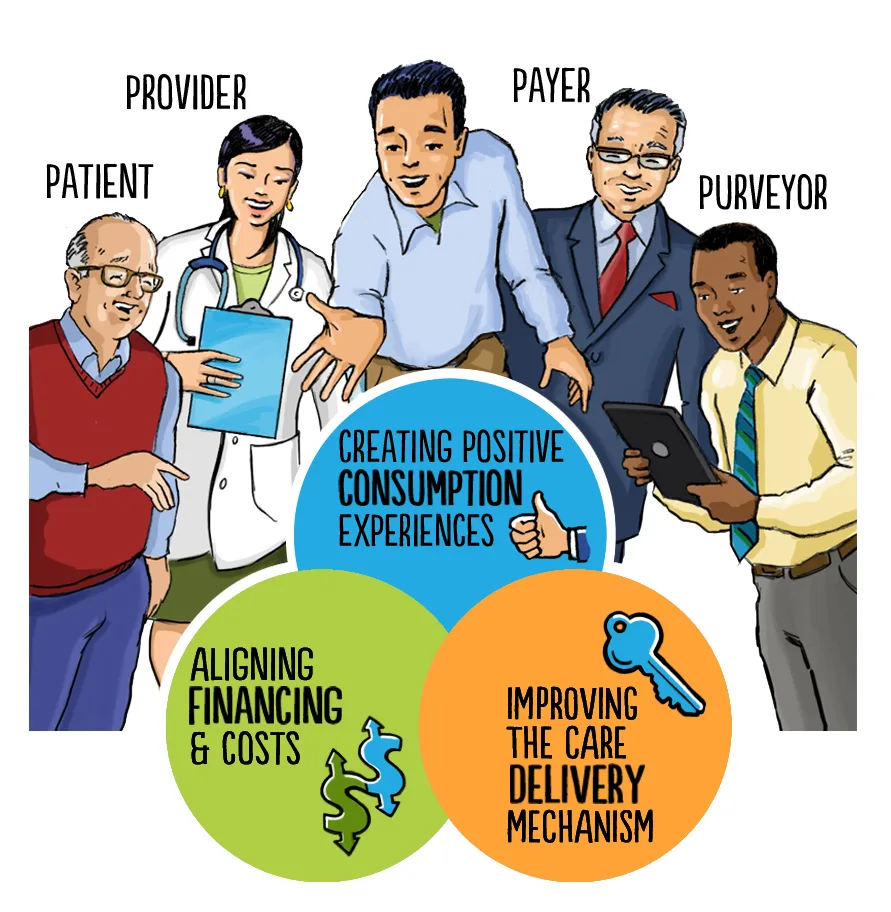
modelH: Healthcare Ecosystem
The retail clinic is my favorite story here. In 2004, many physicians saw clinics as an unnecessary layer between a patient and their doctor. Twenty years on, NPs and PAs are standard in primary care, electronic records are table stakes, and hospitals open their own clinics. Today's unwanted middleman can become tomorrow's standard.
Questions for the Intermediaries Block
- How does an Intermediary influence the Buyer?
- Does it act for the Buyer, the Value Proposition owner, or itself?
- What Costs does it add to the business model?
- What Costs does it add to the Customer Relationship?
- What impact does it have on the Experience?
- Can it be disintermediated?
- Is your business model an Intermediary within another model?
- If so, can you be disintermediated?
The Test Still Works
If the Intermediary benefits before the User or Buyer, it is at odds with the Value Proposition. It must adapt or be disrupted. CMS applied this logic in its 2024 rule limiting how payers compensate Medicare Advantage brokers and agents, on the concern that pay was steering people to plans that were not best for them. A federal judge vacated most of that rule in August 2025, finding CMS had overstepped. The rule fell, but the concern did not. As a Florida resident, I see that gold rush every enrollment season.
But most Buyers and Users have poor situational fluency, and someone has to help them. That is where AI comes in.
What AI Does to Intermediaries
It attacks the ones who sell information and paperwork. If your margin comes from knowing the rules, reading the documents, or moving forms between parties, a model can now do part of that for pennies. Navigation, benefits explanation, coding, and much prior authorization work are all exposed.
It puts AI on both sides of the transaction. Providers use AI to request prior authorization and appeal denials. Payers use it to review them. When everyone uses AI for utilization review, I expect audit trails and human oversight to determine who comes out ahead. That is a robot arms race on administrative spending unless someone redesigns the process. CMS's rule requiring a Prior Authorization API from impacted payers by January 1, 2027 may help create the rails.
It creates new Intermediaries. The chatbot now sits between many patients and their first decision about care. One survey found AI-generated information strongly influences whether its users seek care. Consumer chatbots from general AI companies, EHR platforms with built-in agents, and clearinghouses with agent access all sit in positions of real power. Apply our test to them too. Who do they benefit first?
It raises the value of accountable ones. Someone must still hold the license, carry the risk, and answer when things go wrong. The Intermediary who takes accountability has a stronger position than the one who only moves information.
What To Do About It
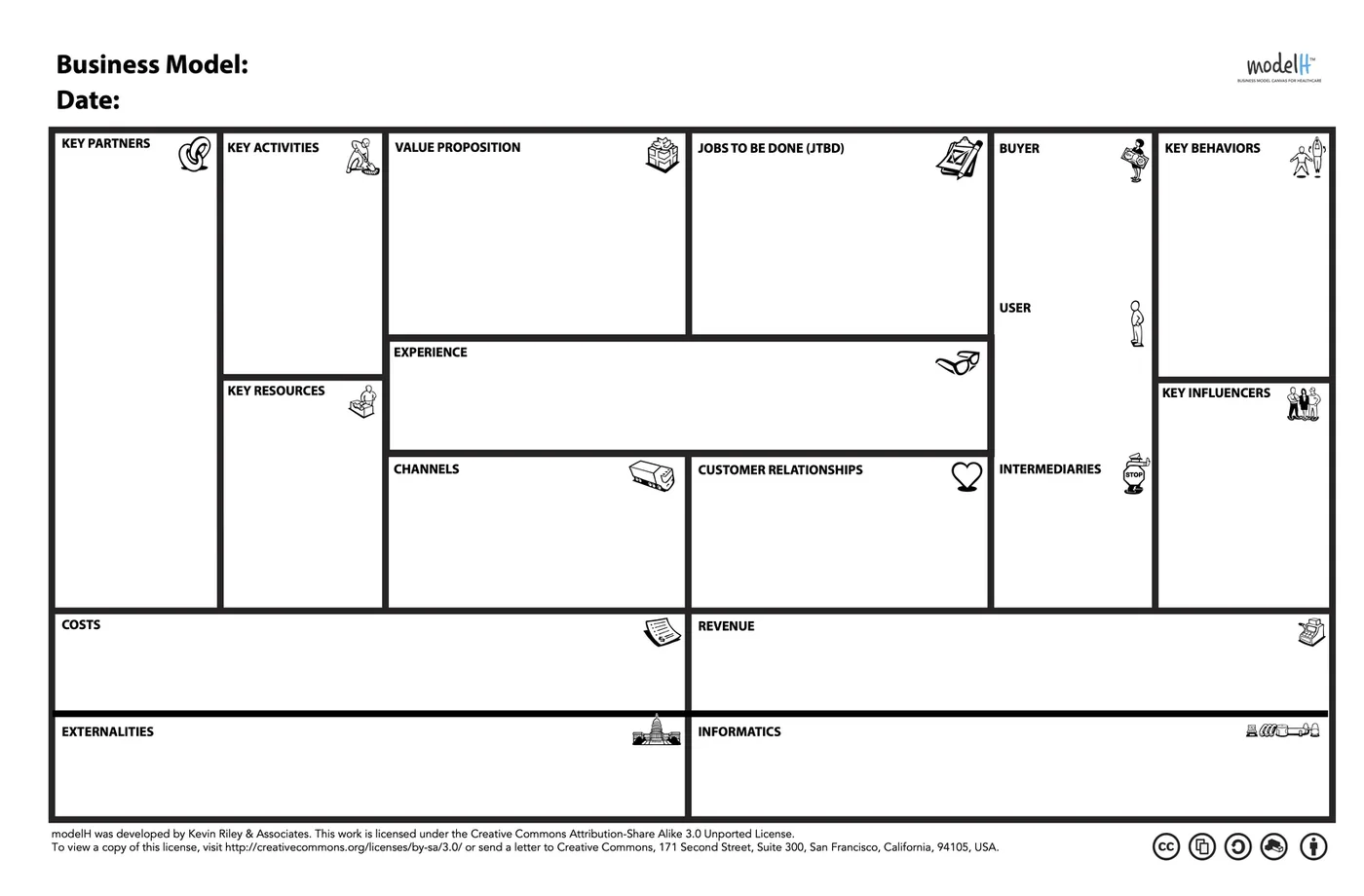
modelH Business Model Placemat
Isolate each Intermediary by drawing a canvas for its business model, then put it back into yours based on its Key Activities, Value Proposition, and Customer Relationship. Then ask where an agent could replace it, where one could replace you, and whether you should partner with it, route around it, or become it.
New Questions for 2026
- Which Intermediaries in our model sell complexity that AI can now handle?
- Is an AI product becoming an Intermediary between us and our customer?
- Could our customer's agent replace us, and what would it still need from us?
- What accountability do we carry that software cannot?
What is Next?
Next, we look at Key Behaviors.
to your health,
Kevin