
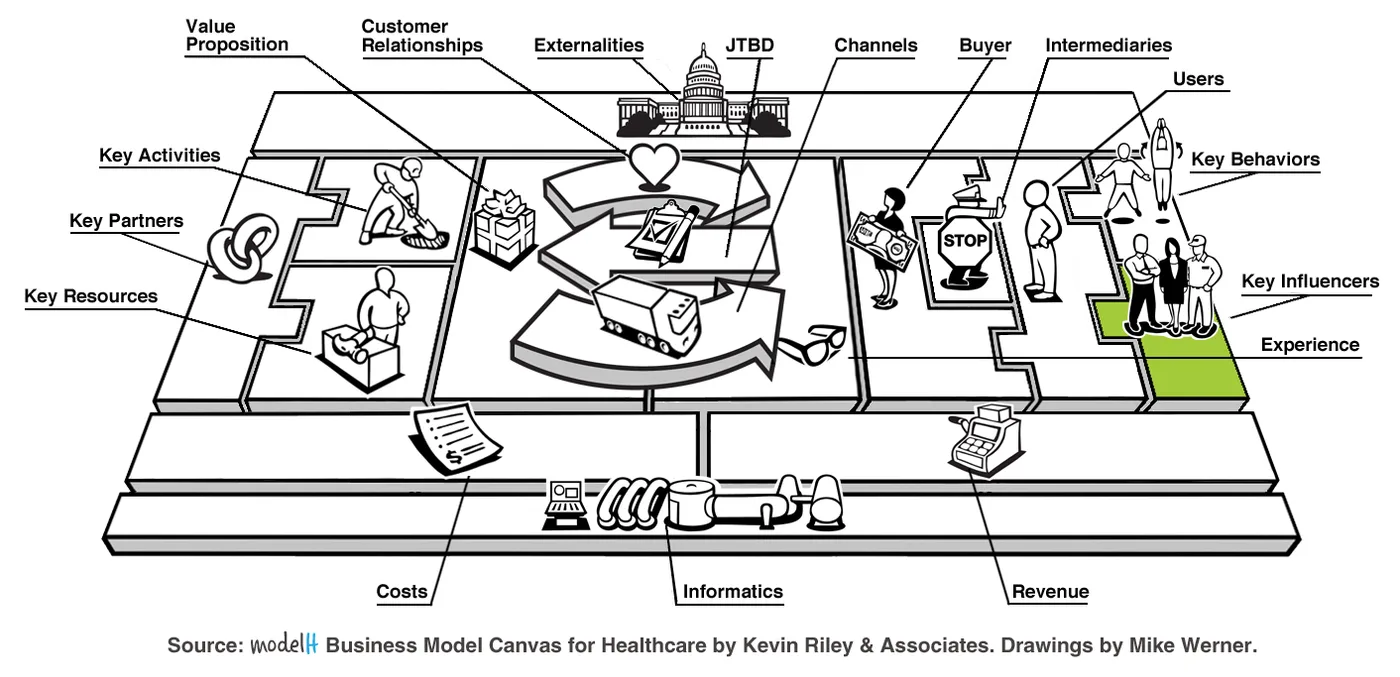
modelH Business Model Canvas: Key Influencers
Key Influencers affect the User's understanding and ability to complete their JTBD. They differ from Intermediaries. An Intermediary sits between the Value Proposition and the Customer Segment and affects how it is seen and paid for. A Key Influencer is an enabler of the User's Key Behaviors. Doctors, family, friends, and co-workers can all play this role. Everyone needs a little help.
Given how much they drive behavior, it makes sense to formalize some of them as Key Partners. Surprisingly few companies do this well.
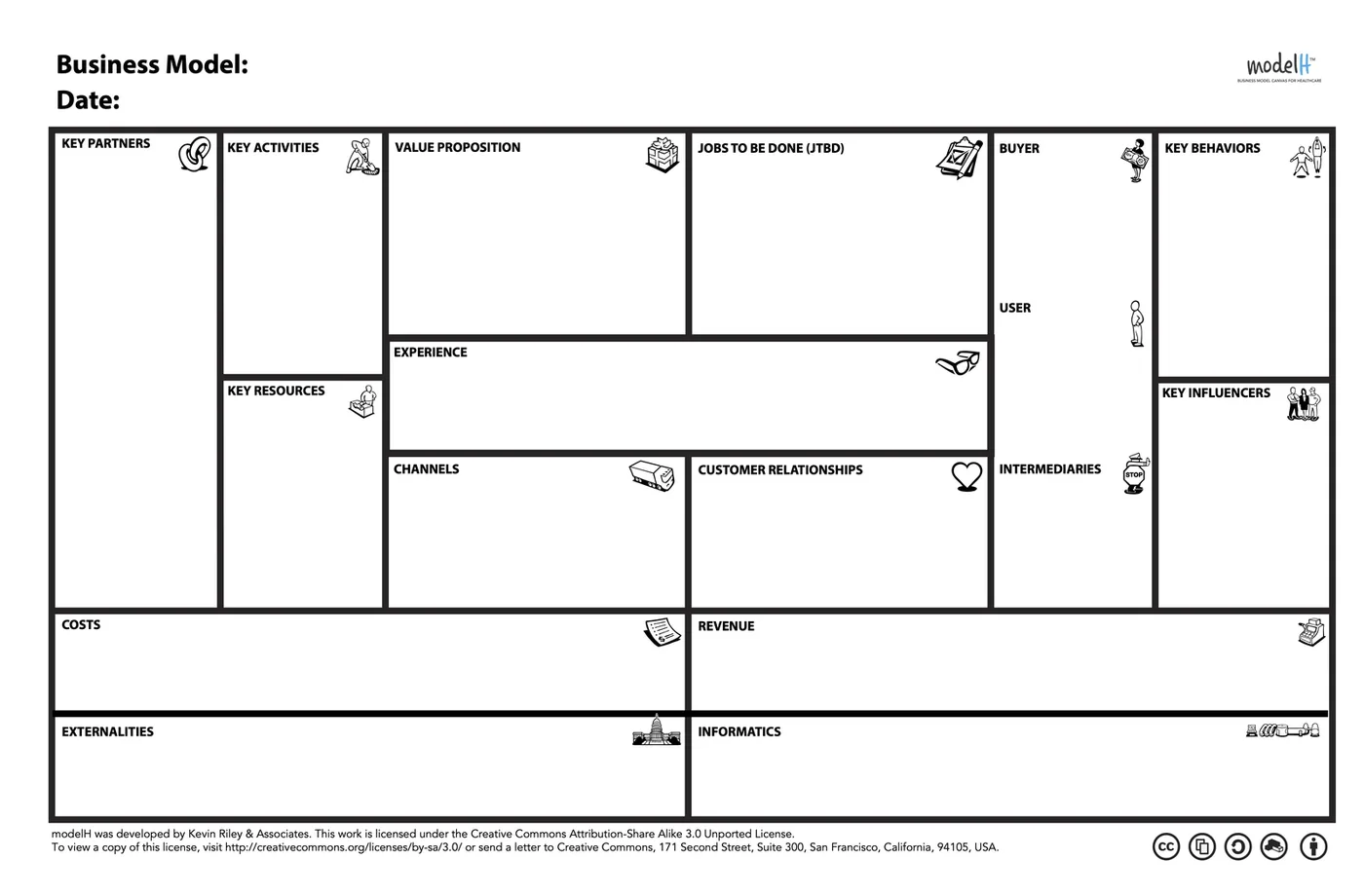
modelH Business Model Placemat
Questions for the Key Influencers Block
- What Key Influencers are required for the Buyer and User to realize the Value Proposition?
- What parts of the JTBD do they affect?
- How do they communicate with the Buyer and User?
- What do they need to understand about your business model?
- How can you activate them without adding Cost?
- How do you turn them into Key Partners without adding Cost or complexity?
Identifying and Activating Them
Not all influencers are equal. People tend to have friends like themselves, which behavioral science calls homophily, and new behaviors stick when they are reinforced repeatedly by close contacts. So find the right ones and draw a canvas for each, as we did for Intermediaries.
Then use a framework. I like the Six Sources of Influence from Influencer: The New Science of Leading Change.
- Personal motivation: stories and experiences that make people want to act.
- Personal ability: coaching and practice with fast, positive feedback.
- Social motivation: peers and leaders who model the behavior, like Key Opinion Leaders in pharma.
- Social ability: teams and networks that help in practice.
- Structural motivation: incentives, rewards, and feedback.
- Structural ability: tools, cues, and reminders that make it easier.
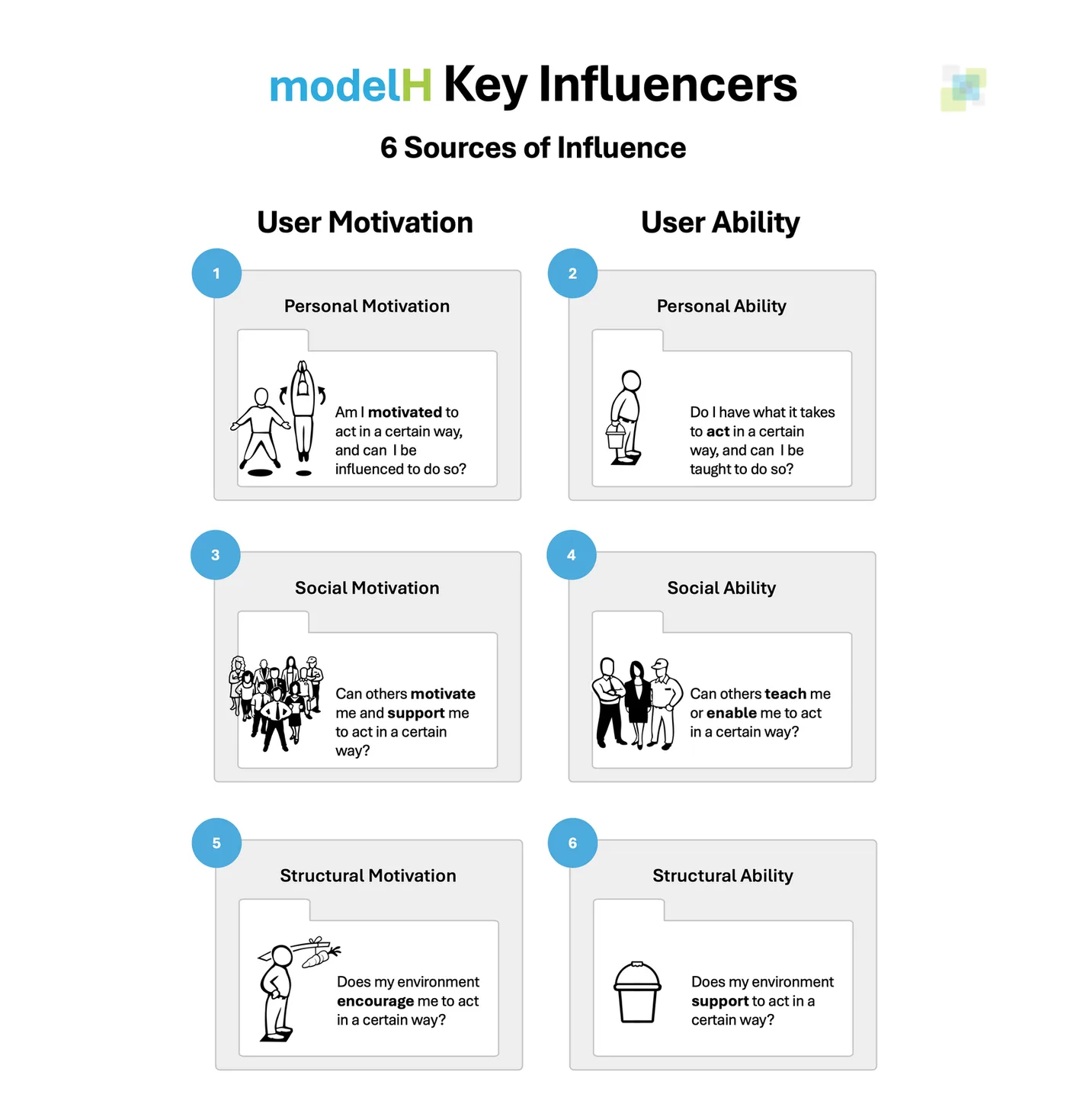
modelH Diagram: Key Influencers
Two Examples
Life sciences: in a clinical research program, the sponsor, the contract research organization, the site, and the participant each have different motivations, and any link can fail. Key Opinion Leaders carry credibility and translate research for everyday use. Companies like Evidation reward people for sharing health data and joining research.
Home care: John is 82 and lives alone. A home health agency installs motion sensors and a smart medication dispenser. His daughter Sarah sees activity and adherence through an app, gets alerted to problems, and video chats with him. Nobody pays Sarah, but she will surely change his behavior. Everybody wins.
AI as a Key Influencer
Here is the big change. For many people, AI now influences health decisions directly. Gallup found about one in four U.S. adults used AI for health information in the past month. It is available at 2 a.m., it never sighs, and it answers the embarrassing question. Yet patients have not abandoned their doctors: Pew found about 85% get health information from providers at least sometimes, against about 2 in 10 from chatbots.
So plan for three things.
Your product will be judged by a third party you do not control. If someone asks a chatbot whether your therapy, plan, or practice is any good, what does it say? Check. Publish clear, accurate, well-sourced information, since these systems draw on what they can find. Life sciences teams face a particular issue here, because a model can say things about a drug that no medical-legal review ever approved.
AI can equip your human influencers. It can draft the note to the family caregiver, prepare the doctor with a summary, and translate a care plan into Sarah's language. Most caregivers are exhausted, and this may be the most underrated use of AI in healthcare.
Human influence gets more valuable, not less. The research says behaviors spread through close, trusted relationships. A model can offer information and simulated warmth. It cannot show up at your father's house. Be careful, also, about products that present AI as a friend to vulnerable people. That is a line I would not let a business model cross casually.
In 2024 I promised to cover technology under a "Platform" block. We folded Platform into Informatics and Key Resources when we finalized the canvas, so that is where it will appear.
New Questions for 2026
- What do the major AI assistants tell people about our Value Proposition today?
- How do we keep that information accurate?
- How can AI equip the human influencers already in the User's life?
- Where does our AI's influence need a human check?
What is Next?
We wrap up the Who.
to your health,
Kevin