
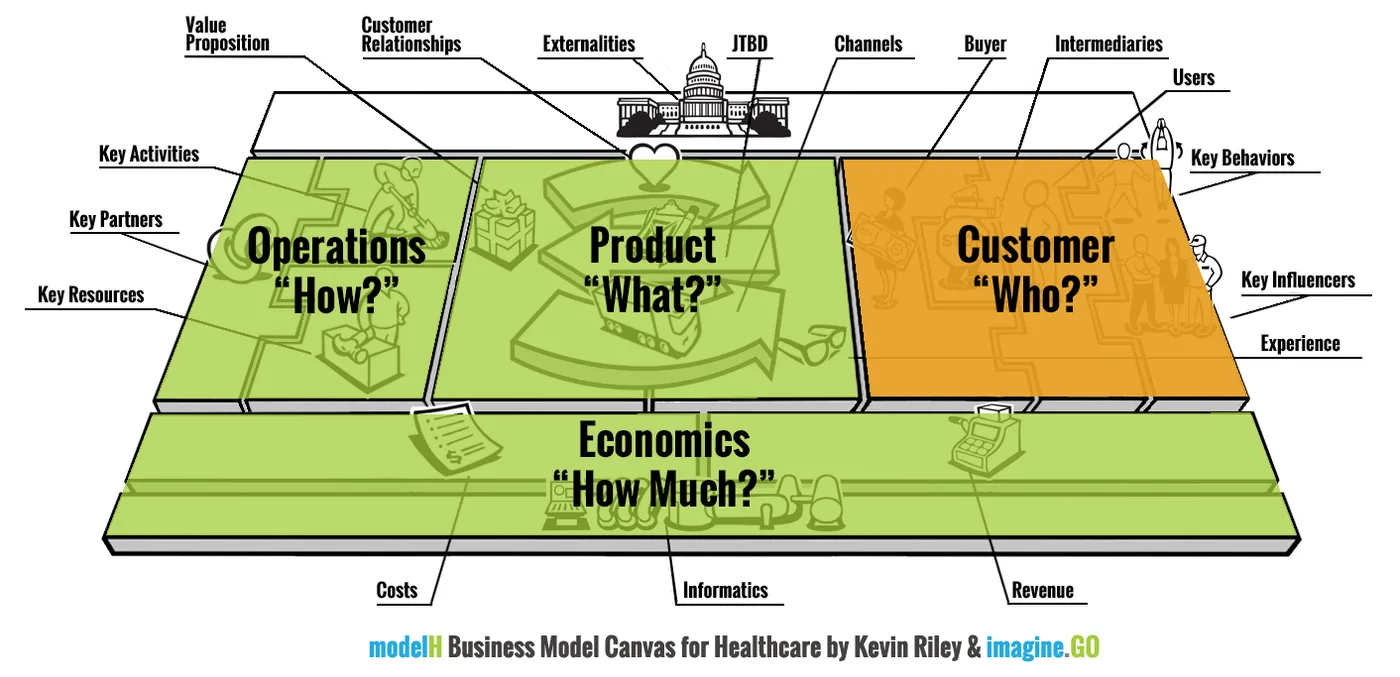
modelH Business Model Canvas: The Who
We close the first part of the revisit with a stroll down memory lane and a victory lap.
What is modelH Again?
A business model canvas is a strategic management template for developing or documenting a business model. It is a visual language rather than a business plan. Alexander Osterwalder proposed the nine building blocks in his PhD work, supervised by Yves Pigneur. I fell in love with it and still have my original copy. While overseeing startups as Chief Innovation Officer at a $12B health insurer and creating a new company for them, I found it a fantastic framing tool, but healthcare's multi-sided nature strained it.
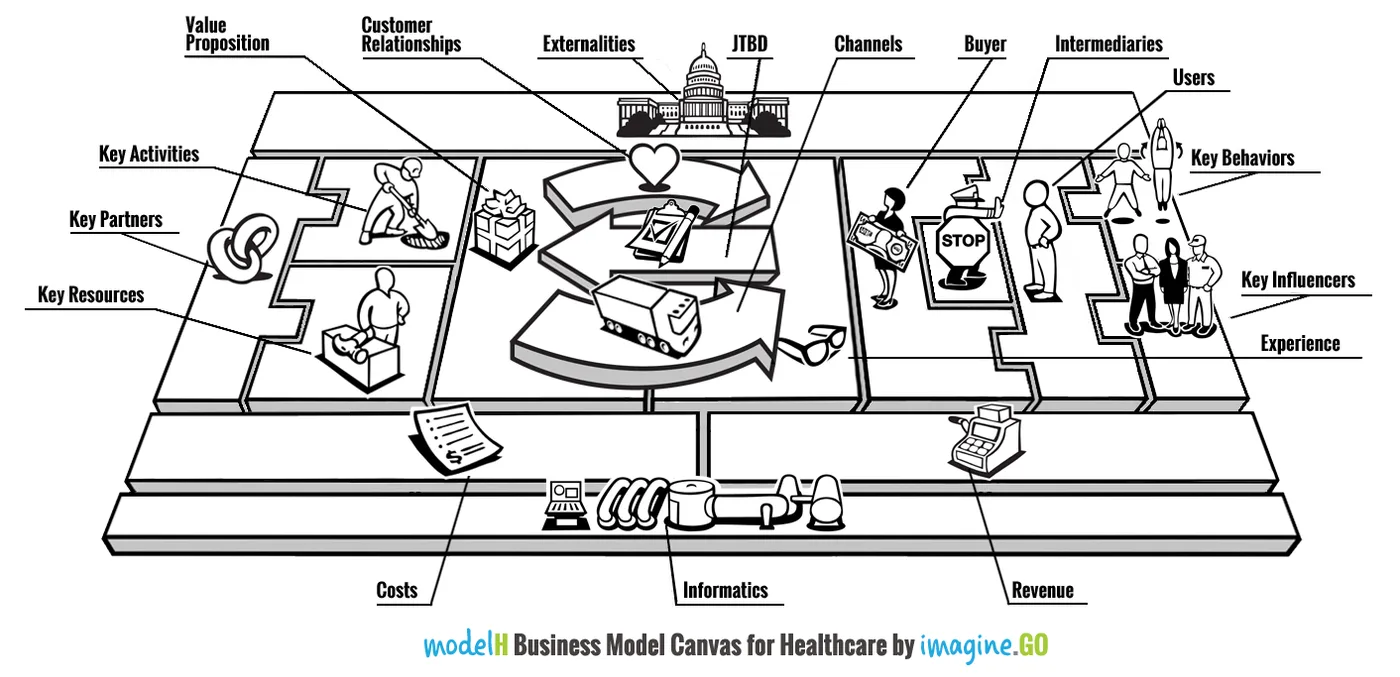
modelH Business Model Canvas
So in 2013 I funded an experiment. About 300 of us around the globe formed the modelH CoCreation Forum. We based our definition of value on Michael Porter: the patient health outcome achieved per healthcare dollar spent. A value-based healthcare business model must result in increased access to necessary care, reduced aggregate cost, and an improved experience for an informed decision maker.
We debated Osterwalder's nine blocks and proposed new ones. Some we kept, some we dropped, some we combined, and some we split. The result was 17.
- Users are the customers that a business model serves.
- Buyers are the customers a business model sells to and may also be the Users.
- Intermediaries affect how a Value Proposition is seen and paid for by the Buyer.
- Jobs-to-be-Done are high-level goals the customer is trying to accomplish.
- Value Propositions are products and services offered to solve the JTBD.
- Key Behaviors are activities required of the User to complete the JTBD.
- Key Influencers affect the User's understanding and ability to complete the JTBD.
- Channels are the way a company brings its Value Proposition to market.
- Customer Relationships are connections a company creates with Buyers and Users.
- Experience is how Buyers and Users perceive Channels and Customer Relationships.
- Key Activities are the most important tasks required to create the Value Proposition.
- Key Resources are the internal actors required to deliver it.
- Key Partners are the external actors required to deliver it.
- Costs are the most important financial drivers of a business model.
- Revenue is the way a company makes money from its customers.
- Informatics is the data and analytics needed to deliver and measure it.
- Externalities are the external forces and regulations imposed upon a business model.
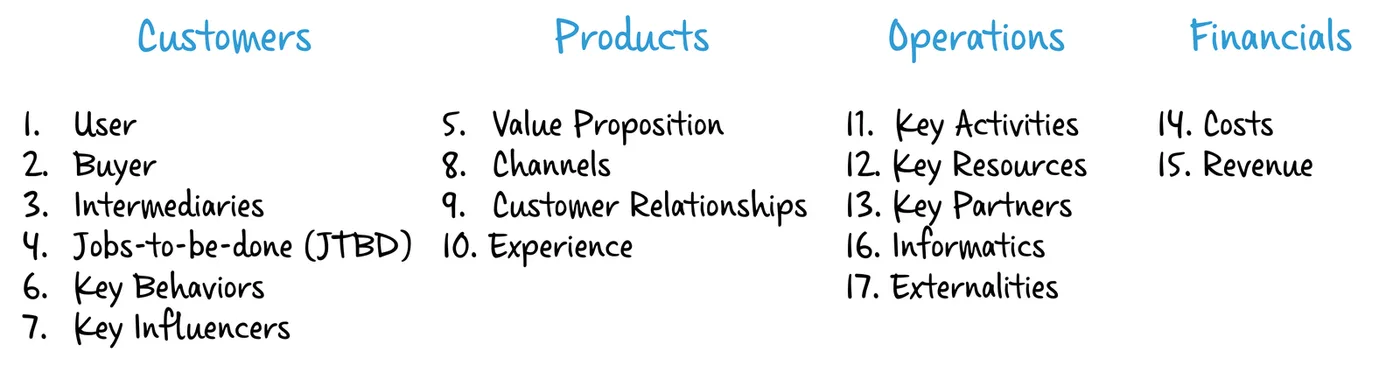
modelH Building Blocks by Business Function
For 2026 we add 18. AI Proof, which we cover at the end of the series.
What We Learned About the Who
- Understanding Your Customers. You are not your customer. Some customers now arrive with an AI.
- Users and Buyers. Validate the need and the market. AI can shrink a market or expand it.
- Segments and Personas. Segment by what someone is trying to do today. AI Personas are hypotheses.
- Jobs-to-be-Done. The job holds still. Decide which steps are done for them, done with them, or still theirs.
- Intermediaries. AI attacks those who sell complexity and creates powerful new ones.
- Key Behaviors. Eliminate needless behaviors, personalize prompts, and demand durable evidence.
- Key Influencers. AI is now one. Equip the humans and watch what it says about you.
The One-Page Who Test
Can you answer these without guessing?
- Who uses this, who pays for it, and who can block it?
- What job are they hiring us for, and what is the AI alternative?
- What must they do for it to work?
- Who or what influences them along the way?
- Which of these answers came from real customers?
What is Next?
When I wrote the first version of this post, I was headed to Alaska to fly fish for wild salmon with my son. I recommend it to anyone who has spent the last few years reading about AI. Next, we pick up the What, starting with Value Propositions.
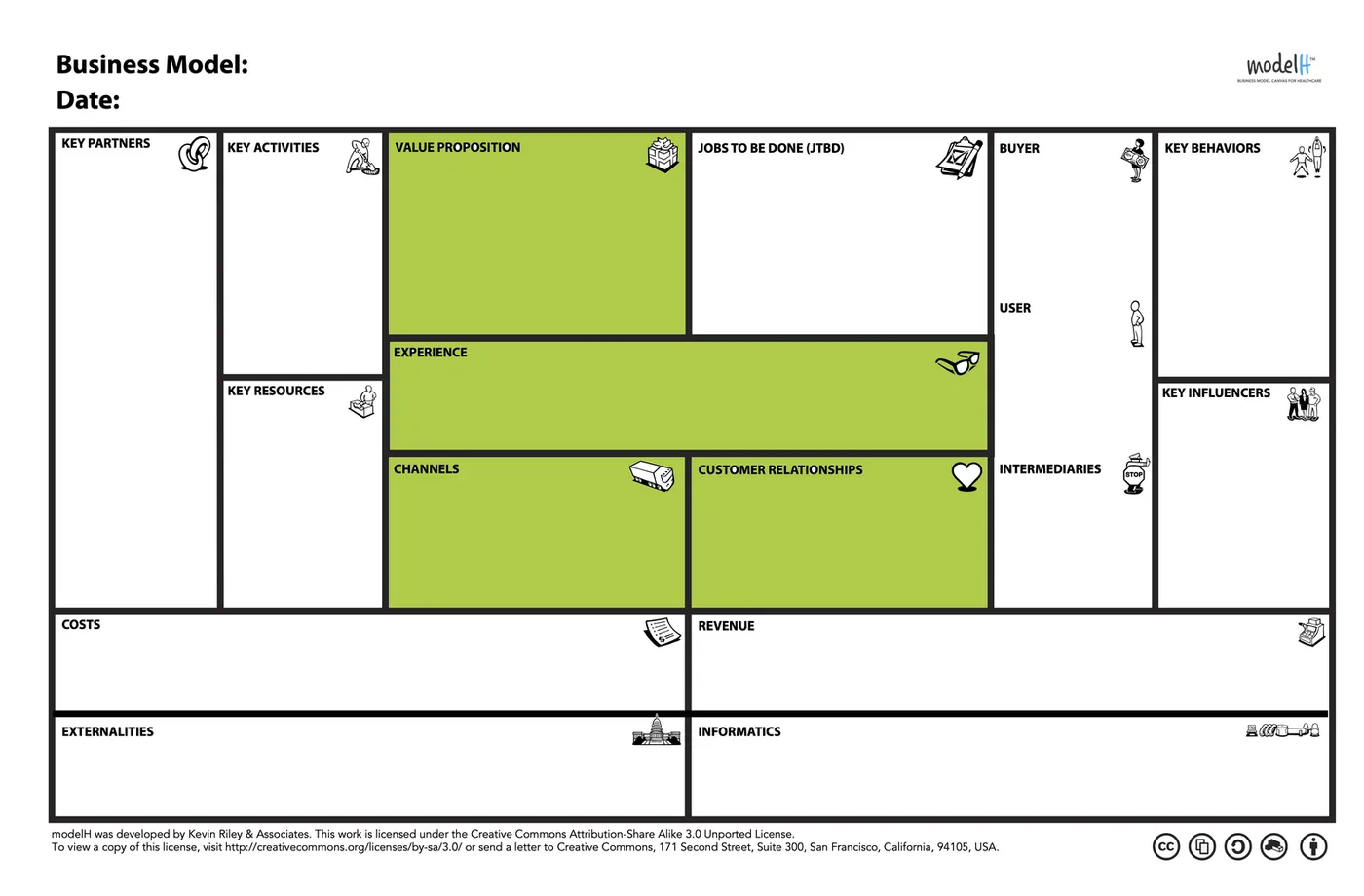
modelH Business Model Placemat: The What
to your health,
Kevin